Τρίτη 19 Μαρτίου 2013

Φουτουριστικοί ουρανοξύστες-φάρμες!


Η κινέζικη πόλη Shenzhen προετοιμάζεται να υποδεχτεί έξι πρωτοποριακούς ουρανοξύστες με το βλέμμα στο μέλλον! Εντυπωσιακά μεγάλα κτήρια, απόλυτα φιλικά προς το περιβάλλον και με βάση την πράσινη ανάπτυξη σχεδιάζονται από το διάσημο γαλλικό αρχιτεκτονικό γραφείο Vincent Callebaut προκειμένου να στεγάσουν εκατοντάδες ανθρώπους, οι οποίοι θα έχουν τη δυνατότητα να ζήσουν πλήρως ενσωματωμένοι στη φύση. Το φουτουριστικό σχέδιο του κτηρίου περιλαμβάνει διαμερίσματα-μικρές φάρμες, αφού στα μπαλκόνια οι ένοικοι θα μπορούν να καλλιεργήσουν τα λαχανικά τους αλλά και να απολαύσουν τη σκιά δασικών δέντρων.
perierga.gr - Φουτουριστικοί ουρανοξύστες-φάρμες!
«Η δυνατότητα να μπορούν οι κάτοικοι να έχουν τα δικά τους… αγροκτήματα στα μπαλκόνια είναι το ζητούμενο της κατασκευής, η οποία σέβεται στο έπακρο το περιβάλλον και θα εκμεταλλεύεται όσο το δευνατόν περισσότερο όλες τις ανανεώσιμες πηγές ενέργειας. Αυτά τα κτήρια είναι η μοναδική λύση σε μεγαλουπόλεις όπου οι κάτοικοι συνωστίζονται σε μικρούς χώρους, ενώ η φύση απουσιάζει έντονα από την καθημερινότητά τους», αναφέρουν οι υπεύθυνοι αρχιτέκτονες.Οι ουρανοξύστες-φάρμες αναμένεται να ολοκληρωθούν μέσ στα επόμενα τρία χρόνια, ενώ το ενδιαφέρον των Κινέζων σε παρόμοια κτήρια είναι ιδιαίτερα μεγάλο.
perierga.gr - Φουτουριστικοί ουρανοξύστες-φάρμες!
perierga.gr - Φουτουριστικοί ουρανοξύστες-φάρμες!πηγη:perierga

Σάββατο 16 Μαρτίου 2013

Βρετανική… τσαγερί σε ένα δεντρόσπιτο!


Το απογευματινό τσάι αποτελεί βασικό στοιχείο της αγγλικής παράδοσης, που έγινε μόδα μεταξύ της αγγλικής ελίτ στα μέσα του 1840. Μία ώρα οδικώς από τη Γλασκώβη βρίσκεται  το «The Lodge» που χτίστηκε το 1864 σε μια πραγματικά εντυπωσιακή τοποθεσία στις όχθες της λίμνης Loch Goil – ένα ξεχωριστό μέρος για να απολαύσει κάποιος το τσάι του, συνοδεία σπιτικού κέικ.


perierga.gr - Βρετανική... τσαγερί σε ένα δεντρόσπιτο!

perierga.gr - Βρετανική... τσαγερί σε ένα δεντρόσπιτο!
πηγη:perierga.gr

Παρασκευή 15 Μαρτίου 2013

Το Πανεπιστήμιο του Μέριλαντ θα εγκαταστήσει περισσότερες Πράσινες στέγες


The University of Maryland to Install More Green Roofs


Το Πανεπιστήμιο του Μέριλαντ θα εγκαταστήσει περισσότερες Πράσινες στέγες


Το Πανεπιστήμιο του Maryland εγκατέστησε το πρώτο εκτεταμένο πράσινο δώμα πάνω σε μία  στέγη το φθινόπωρο, του 2008 σχετικά στο Cumberland Hall. Περίπου 6.000 τετραγωνικά πόδια του τελευταίου ορόφου καλύπτονται από βλάστηση. Το  κτίριοAdele H. Stamp Union   ολοκληρώθηκε και ανακαινίστηκε  περιλαμβάνοντας ακόμη δύο νέες πράσινες στέγες το 2009.

Το Συμβουλίο  του Πανεπιστήμιου του Maryland για το Περιβάλλον ανταμείβονται πρόσφατα  με επιχορήγηση  δύο μεταπτυχιακούς φοιτητές, να επεκτείνουν την έρευνα για την ηλιακή ενέργεια και την  βλάστηση  στην στέγη.


By: Samantha Yurek

The University of Maryland installed their first extensive green roof back in the fall if 2008 on Cumberland Hall. Approximately 6,000 square feet of the rooftop is covered in vegetation. The Adele H. Stamp Union building also completed renovations which involves yet another two new green roofs in 2009.

The University of Maryland's Council on the Environment recently rewarded a grant to two graduate students, to extend on their solar energy and vegetated roof research.
πηγή: greenrooftechnology.com
μετάφραση
Κώστας Τάτσης
Msc Γεωπονος
ειδικός στα φυτεμένα δώματα


Πέμπτη 14 Μαρτίου 2013

Is This What Urban Buildings Will Look Like In 2050? Ετσι μοιάζουν τα κτηρια το 2050


          Τα σύχρονα κτήρια θα έχουν εσωτερικές φάρμες, τοίχους που θα δεσμεύουν CO2 και θα παράγουν Οξυγόνο Το 2050 το περιβάλλον θα είναι  πολύ διαφορετικό από σήμερα . Στις πόλεις θα ζουν 6,75 δισ. ανθρώπων από 9 που θα είναι τότε ο παγκόσμιος πληθυσμός. Όλοι θα έχουν μεγαλώσει με το Διαδίκτυο και οι κάτοικοι της πόλης θα έχουν πρόσβαση σε φυσικούς πόρους λιγότερο από ό,τι σήμερα, καθιστώντας την αναγέννηση του περιβάλλοντός  μεγαλύτερη προτεραιότητα.
        Νέες ιδέες , σύγχρονες τεχνολογίες στην μηχανική βοηθούν σε πραγματικές λύσεις και έτσι η μελετητική εταιρεία ARUP κατέληξε σε αυτή την μακέτα κτηρίου του μέλλοντος  Έχει το δικό του τμήμα για παραγωγή ενέργειας με φωτοβολταϊκά, με μικρές ανεμογεννήτριες, και παραγωγή βιοκαυσίμων από φύκια, παραγωγή γεωργικών προϊόντων  με κύρια τα πουλερικά, το κρέας, ψάρια και λαχανικά.
         Μεμβράνη περιβάλλει το κτήριο παράγοντάς οξυγόνο απο το CO2 της ατμόσφαιρας  επιφάνειες ανάκτησης θερμότητας, με υλικά που διαμορφώνονται και αυτό επισκευάζονται και  όλη η κατασκευή να ενσωματώνεται αρμονικά στην πόλη.
           Η Arup επισημαίνει τα πέντε κύρια χαρακτηριστικά: την ευελιξία, τη βιωσιμότητα, την διαδραστικότητα, την ένταξη στην κοινότητα, και των ευφυών συστημάτων (συμπεριλαμβανομένης της αυτοματοποιημένης ανακύκλωσης). Το κτίριο διαθέτει ένα «δυναμικό δίκτυο των βρόγχων ανάδρασης που χαρακτηρίζεται από έξυπνα υλικά, αισθητήρες, την ανταλλαγή δεδομένων, καθώς και αυτοματοποιημένα συστήματα που συγχωνεύονται, ουσιαστικά λειτουργεί ως ένα συνθετικό και άκρως ευαίσθητο νευρικό σύστημα»,  με βάση τους μελετητές.
           Ένα  φουτουριστικό  στοιχείο και το πιο σημαντικό  είναι απ 'όλα, η δομή είναι  που εντελώς modular, και έχει σχεδιαστεί για να μετατοπίζεται  (με τη χρήση ρομπότ, φυσικά). 
Παρουσιάζοντας το σχέδιο της Arup ο Josef  Hargrave  περιγράφει ότι  "είναι σε θέση να κάνει συνειδητές αποφάσεις και να  υπολογίζει με βάση περιβάλλον", μια δομή που "ζει και αναπνέει"  και "είναι σε θέση να υποστηρίξει τις πόλεις και τους ανθρώπους του αύριο."

Is This What Urban Buildings Will Look Like In 2050? 


 With internal farms, walls that convert CO2 to oxygen, and even the ability to personalize itself based on your DNA, this concept for the building of the future is a sight to behold.
                          2050 is far enough off to imagine the urban environment will be very different from today. But, from current trends, we know a few things are likely. Three-quarters of people will live in a city, or 6.75 billion of the projected 9 billion global total. Everyone will have grown up with the Internet, and its successors. And city residents will have access to less natural resources than today, making regeneration and efficiency more of a priority.
                          Based on this, and extrapolating out some emerging ideas, the engineering and design firm Arup has come up with this mock-up of the building of the future. As you can see, it has its own energy systems ("micro-wind," "solar PV paint," and "algae facade" for producing biofuels). There is an integrated layer for meat, poultry, fish, and vegetable farming; a "building membrane" to convert CO2 to oxygen; heat recovery surfaces; materials that phase change and repair themselves; seamless integration with the rest of the city; and much else.www.topiodomi.gr

Arup points to five main attributes: flexibility, sustainability, reactivity, community integration, and smart systems (including automated recycling). The building has a "dynamic network of feedback loops characterized by smart materials, sensors, data exchange, and automated systems that merge together, virtually functioning as a synthetic and highly sensitive nervous system," it says.
Most futuristic of all, the structure is completely modular, and designed to be shifted about (using robots, of course). The building has three layer types, with different life-spans: a permanent layer at the bottom, a 10- to 20-year layer (which includes the "facade and primary fit-out walls, finishes, or on-floor mechanical plant.") And a third layer that can incorporate rapid changes, such as new IT equipment.

The building of the future meets personal needs--"down to an individual’s genetic composition"; gathers information from the environment; and "reacts to contextual clues." Introducing the design, Arup’s Josef Hargrave describes it as "able to make informed and calculated decisions based on their surrounding environment", a "living and breathing" structure "able to support the cities and people of tomorrow.”
Maybe the future isn’t so bad, after all.
 πηγη:.fastcoexist.com

Κυριακή 10 Μαρτίου 2013

Ένα «αόρατο» σπίτι-λουλούδι μέσα στο έδαφος!


Ο ποδοσφαιριστής Γκάρι Νέβιλ είχε στο μυαλό του μια εικόνα ενός τεράστιου λουλουδιού στην κορυφή ενός λόφου, αλλά δεν ήξερε τι ακριβώς ήταν αυτό που έβλεπε συχνά στα…
όνειρά του.
perierga.gr - Ένα "αόρατο" σπίτι-λουλούδι κάτω από το έδαφος!
Μέχρι που το αρχιτεκτονικό γραφείο Make Architects τού έδωσε μια καλή εξήγηση: Αυτό είναι το σπίτι των ονείρων σου, διαμορφωμένο σαν ένα τεράστιο »αφηρημένο» λουλούδι στο έδαφος, ή καλύτερα κάτω από αυτό!
perierga.gr - Ένα "αόρατο" σπίτι-λουλούδι κάτω από το έδαφος!
Το «υπόγειο» σπίτι κατασκευάστηκε σχεδόν «αόρατο» επάνω σε έναν λόφο, δένοντας αρμονικά με το τοπίο, καλύπτοντας μια έκταση 10.000 τετραγωνικών ποδιών, αρχιτεκτονικά τολμηρό και φιλικό προς το περιβάλλον.
perierga.gr - Ένα "αόρατο" σπίτι-λουλούδι κάτω από το έδαφος!
Πιο συγκεκριμένα, ολόκληρη η κατοικία εξαπλώνεται κάτω από το έδαφος, ενώ επάνω στο λόφο οι χώροι του μοιάζουν με τεράστια πέταλα λουλουδιού, καλύπτοντας όλες τις ανάγκες της οικογένειας.
perierga.gr - Ένα "αόρατο" σπίτι-λουλούδι κάτω από το έδαφος!
Τοπικά υλικά και παραδοσιακές τεχνικές κατασκευής χρησιμοποιήθηκαν, ενώ ηλιακοί συλλέκτες και οι ανεμογεννήτριες παράγουν βιώσιμη ενέργεια. Με λίγα λόγια: Αυτό το σπίτι είναι τόσο «πράσινο» όσο όσο ο περιβάλλων χώρος.
perierga.gr - Ένα "αόρατο" σπίτι-λουλούδι κάτω από το έδαφος!
Τα δωμάτια έχουν απρόσκοπτη θέα, ενώ το φως του ήλιου πλημμυρίζει τους χώρους από τα μεγάλα παράθυρα αλλά και από τα ανοίγματα στην «οροφή». Η εσωτερική διακόσμηση κινείται σε μίνιμαλ γραμμές, με έμφαση στο ξύλο, στην πέτρα και στο γυαλί.
perierga.gr - Ένα "αόρατο" σπίτι-λουλούδι κάτω από το έδαφος!
«Ποτέ δεν φανταζόταν ένα τόσο διαφορετικό σπίτι. Όμως φαίνεται να το απολαμβάνει στο έπακρο, γιατί είναι και αυτό τόσο ξεχωριστό όσο ό ίδιος», λένε οι αρχιτέκτονες για τον ιδιοκτήτη.
perierga.gr - Ένα "αόρατο" σπίτι-λουλούδι κάτω από το έδαφος!
perierga.gρ

Σάββατο 9 Μαρτίου 2013

Which Major Cities Are Leaders in Reducing Greenhouse Gas Emissions?

Ποιές μητροπόλεις είναι πρωτοπόρες στην μείωση των αερίων του Θερμοκηπίου?
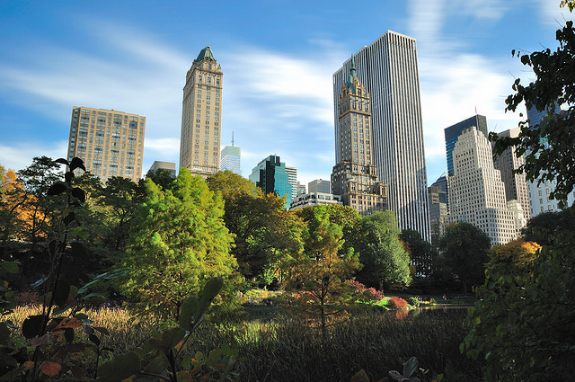
Central Park, NYC
New York City is a leader in lowering greenhouse gas emissions. Photo by Flickr user Andrew C Mace
Cities are to greenhouse-gas emissions what Chernobyl was to nuclear power plant failures, which is to say, they’re the worst offenders out there. Cities consume two-thirds of the world’s energy and cough up 70 percent of global CO2 emissions. Some are even gaining notoriety: Air pollution in Beijing is so severe these days that residents can’t even escape it by going indoors, according to scientists at Columbia University’s Earth Institute.
But many cities are making progress in shrinking their greenhouse-gas footprints, and a recent new study shows that they can make reductions of as much as 70 percent. Scientists at University of Toronto’s Civil Engineering department used Toronto as a test piece for studying cities’ carbon footprints, and they outlined how changes in transportation, buildings and energy supplies–things like boosting insulation, switching to LED lighting and putting in building management systems and automatic lighting controls–can reduce emissions.
A 30 percent reduction would be fairly simple, the researchers say. “With current policies, especially cleaning of the electricity grid, Toronto’s per-capita GHG [greenhouse gas] emissions could be reduced by 30 per cent over the next 20 years,” study author Chris Kennedy said in a statement. “To go further, however, reducing emissions in the order of 70 per cent, would require significant retrofitting of the building stock, utilization of renewable heating and cooling systems, and the complete proliferation of electric, or other low carbon, automobiles.”
Toronto has yet to begin adopting the plan Kennedy and his colleagues have outlined, but it is among the 58 city-members of the C40 Cities Climate Leadership Group, an organization committed to developing and implementing policies and practices to reduce greenhouse gas emissions. The group’s chair is New York City Mayor Michael Bloomberg, and in fact, New York is one of the most innovative and aggressive cities in the world when it comes to emissions reduction. “In my mind London and NYC are providing the greatest leadership,” Kennedy told Surprising Science.
Many other cities are also making strides, according to a 2011 study issued by C40 that details what its member-cities are doing to reduce their emissions. Forty major cities participated in the research, including Chicago, Houston, Los Angeles, Philadelphia and New York in the U.S., and cities from Moscow and Jakarta to Beijing and Mexico City internationally–many of the most populated, high-traffic urban centers in the world. Engineering and design firm Arup, along with the Clinton Climate Initiative, surveyed city officials and conducted research on their greenhouse-gas output and actions to reduce emissions.
Five cities stood out–here’s a breakdown of some highlights:
São Paulo: When landfills were reaching capacity in South America’s most populous city, the Brazilian metropolis installed thermoelectric power plants to capture and burn biogases emitted by the decaying waste. São Paulo’s 10 million citizens generate 15,000 tons of garbage each day, and trash is one of the city’s biggest greenhouse-gas challenges—as opposed to other cities, which struggle more with emissions from buildings and energy supplies. This step allowed São Paulo to reduce methane emissions and produce clean energy at the same time, and now 7 percent of the city’s electricity needs are met this way.
Copenhagen: Known for its bicycle culture, Denmark’s capital is a leader in green transportation, with 36 percent of work- or school-related commutes done by pedaling, according to the C40 study. Other cities have used Copenhagen as a model for their cycle parking, lanes, signage and other biking infrastructure. But Copenhagen is also a leader in waste management. Since 1988, it has reduced the amount of garbage it sends to landfills from 40 percent to less than 2 percent, and fully half of the city’s waste is recycled and used to generate heat. Nearly all of Copenhagen’s buildings (PDF) utilize an underground piping network that distributes hot water or steam in lieu of relying on boilers or furnaces. Citizens are required to pay for the heat regardless of whether they’re connected to the system.
Addis Ababa: In Ethiopia’s capital, shoddy water pipes are being replaced to help boost the city’s 50 percent leakage rate  “Cities can lose huge amounts of their often energy-intensively produced potable water due to leakage from pipes during distribution,” the C40 study authors wrote. “Wasting potable water… increases greenhouse gas emissions, and is also a major issue for those cities that are threatened with droughts. The number of drought-threatened cities is rising due to climate change.” 
That project joins large-scale, low-carbon housing developments that will create new homes for people currently living in Addis Ababa’s shanty towns, the C40 study showed. The city is also planning to convert 40 percent of its land to green space, which serves to absorb COemissions and reduce the urban-heat-island effect. To that end, Addis Ababa’s mayor instituted a plan to plant three million new trees (the most ambitious tree-planting project in the world) and create a giant nature reserve featuring every tree and plant native to Ethiopia. 
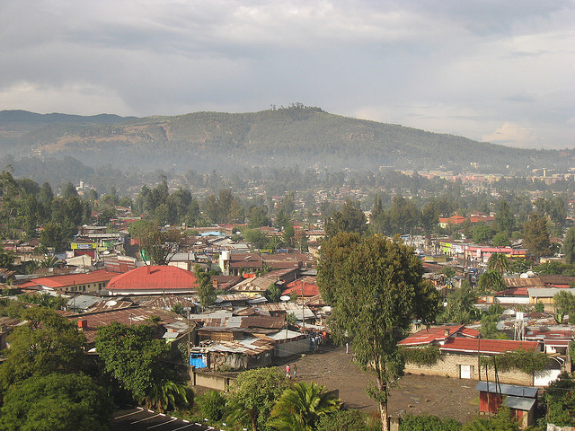
Addis Ababa, Ethiopia
Ethiopia’s capital city Addis Ababa is shrinking its carbon footprint by building low-carbon, low-income housing and launching the most aggressive tree-planting program in the world. Photo by Flickr user Travlr
New York City: The city that never sleeps is a leader in green policy, according to the C40 study. Its PlaNYC, a program designed to reduce greenhouse gas emissions and otherwise prepare for climate change, includes planting trees and other vegetation to enhance 800 acres of parks and open spaces and pushing new development to areas with existing transit access so that new subway and bus lines don’t have to be added. The Greener Greater Buildings plan mandates upgrades to meet the NYC Energy Conservation Code for renovations, and the NYC Green Infrastructure Plan integrates details like green roofs and porous pavement into the city’s quest to manage storm runoff and alleviate pressure on wastewater treatment plants, which overflow in storms. New York is also known for its system of innovative pneumatic troughs that remove trash from Roosevelt Island through underground tunnels and eliminate the need for fleets of fossil-fuel-burning garbage trucks that clog traffic and wear down streets.
London: Greenhouse-gas reductions in the UK’s capital and largest city are impressive in part because it’s the only city to have achieved them “by diminishing consumption [rather] than a change of energy sources,” according to another study published last fall by Kennedy. His research showed that London was also the sole city where carbon emissions from commercial and institutional buildings have dropped. How did London make it happen? Establishing a so-called Congestion Charge Zone (PDF) was one key measure. A fee structure tied to emissions restricts the movement of freight and other heavy goods vehicles within the city’s center and allows electric vehicles to travel for free in the zone. The scheme, introduced in 2003, “has reduced vehicle numbers in the central business district by over 70,000 per day, cutting carbon emissions in the zone by 15%,” according to the study authors. Also, the city’s transit systems are integrated and easy to use thanks to a smart-ticket program, attracting more riders who might otherwise drive gas-guzzling cars.
While the overall effect of these emissions-reduction efforts hasn’t yet been measured, C40 study authors say the 40 cities have taken a combined total of 4,734 actions to tackle climate change. The simplest and most immediate change cities can make, according to Kennedy, is to decarbonize their electricity grids. “This is important because a low-carbon electricity source can be an enabler of low carbon technologies in other sectors, for example electric vehicles, or heating via ground source heat pumps,” he says. But the most effective change Kennedy recommends that city residents make in lowering their carbon footprints is to set their home thermostats 1 or 2 degrees lower in the winter or higher in the summer.
What does or could your city do to reduce its emissions? Leave us a note with your ideas!

Posted By: 
πηγη:http://blogs.smithsonianmag.com

Πλήρης Κάλυψη


Η οικία είναι απόλυτα καλυμμένη από Γρασίδι


Έχει σχεδιαστεί από τον  αρχιτέκτονα Weichlbauer Ortis και βρίσκεται στην Αυστρία στο Frohnleiten


Grass covered house, designed by architect Weichlbauer Ortis in Frohnleiten, Austria.


This home’s facade is completely covered in astro turf, helping it blend into its naturally surroundings wonderfully